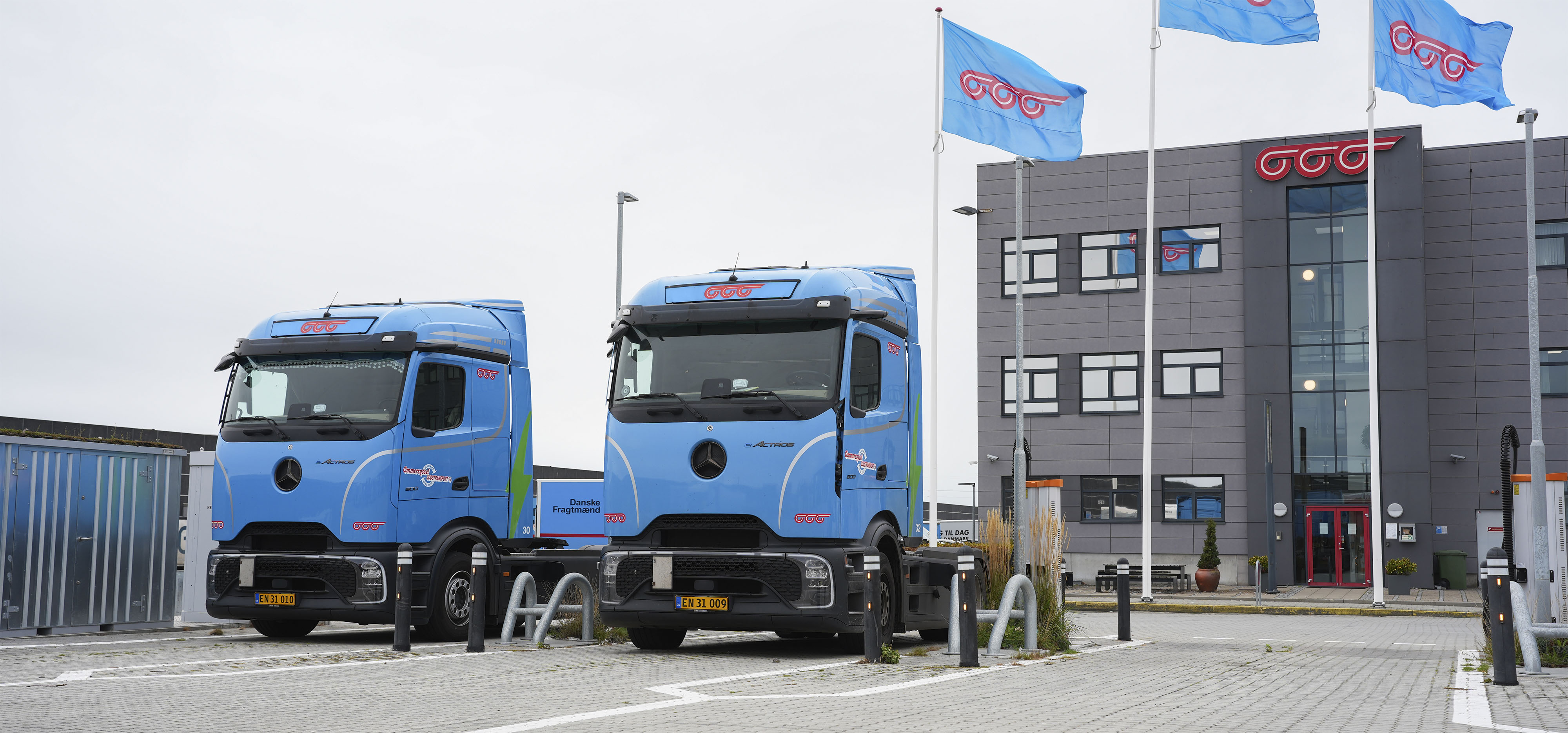
Introducing our new future-proof energy model
15 October 2026
The transport industry is changing, and at Danske Fragtmænd, we continuously invest in more efficient and electrified transport operations. As the industry evolves, so does the mix of energy sources we use to transport our customers' goods. We are therefore introducing a new energy model that more accurately reflects the actual distribution between diesel and electricity in our transport operations.
The calculation does not depend on the number of electric trucks in our fleet. Instead, it reflects the proportion of our total mileage covered by electric and diesel-powered trucks. We believe this provides a much more accurate picture. In other words, we base the calculation on the kilometres driven using electricity and diesel rather than simply the number of vehicles.
Diesel prices will continue to form part of the calculation for the diesel-powered share of our transport operations, while electricity prices will apply to the electric share. We weight the two energy sources according to their respective proportions of our total mileage. For example, if electric trucks account for 10 percent of the total kilometres driven, electricity will represent 10 percent of the energy model, regardless of how many electric trucks we have in our fleet.
This approach allows the model to reflect actual developments in our transport operations. We have also used our experience with electric trucks to forecast future developments, ensuring that the model accounts for continued electrification.
For our customers, this means a more transparent, dynamic and future-proof energy model, where changes in the energy surcharge more accurately reflect how we actually carry out our transport operations.
The new energy model will take effect on 1 November 2026, resulting in a new energy surcharge of 39.1 percent compared with 46.7 percent under the previous calculation method. This represents a reduction of 7.6 percentage points.
We continue to invest in electrification
At the same time, we will continue investing in electrification to enable a gradual transition from fossil fuels to electric transport.
Electrification requires investments beyond the trucks themselves. These include charging infrastructure at our terminals and other facilities, energy supply systems and capacity expansions. In addition, we incur ongoing costs for operating and maintaining the necessary infrastructure.
To support continued electrification, we will therefore increase the environmental surcharge by 1 percentage point, from 7 to 8 percent, effective 1 January 2027.
These changes will create a clearer connection between our actual energy consumption, our customers' energy surcharges and the investments required to increase the share of electric transport.